If you’re planning a kitchen remodel in St. Louis, you’ve probably searched “kitchen remodel cost” and found wildly conflicting numbers. National averages say $25,000-$65,000. Your neighbor spent $140,000. Online calculators spit out estimates that seem either impossibly low or shockingly high.
Here’s the truth: kitchen remodeling costs vary dramatically based on the scope of work, the quality of materials, and the type of contractor you hire. But unlike most contractors who keep their pricing mysterious until you’re deep into the sales process, we’re going to show you exactly what kitchens cost in St. Louis in 2026—with real numbers from actual projects.
I’m Josh McDermott, owner of JT McDermott Remodeling Contractors. We’ve been remodeling both newer and historic homes in the St. Louis metro for over 30 years, and we believe in complete transparency. This guide will show you what kitchen projects actually cost, what drives those costs, and how to think about your investment.
At J.T. McDermott Remodeling, we’ve been delivering award-winning kitchen remodels across St. Louis for over 30 years. Our design-build approach means you get a fixed-price proposal before work begins, so there are no budget surprises.
The St. Louis Kitchen Remodeling Market in 2026
Before we dive into specific numbers, let’s talk about what’s happening in the St. Louis remodeling market right now.
Labor remains the biggest challenge. Too many people went to college, and skilled tradespeople—master carpenters, plumbers, electricians—are in short supply. Top talent commands premium wages, and rightfully so. These are professionals with decades of experience working on complex historic homes where every project reveals surprises.
Material costs have stabilized after the volatility of recent years, but quality materials still command significant investment. Supply chains are reliable again, but the price increases from previous years haven’t reversed.
Interest rates have declined from their recent peaks, making home equity financing more attractive for larger projects. This matters because many significant kitchen remodels in St. Louis are financed through home equity lines or a blend of cash and loans.
The housing market remains tight in desirable St. Louis neighborhoods like Clayton, Webster Groves, Ladue, Central West End, Kirkwood, and Richmond Heights. Homes with the amenities many people want in their forever home are hard to come by because of this. There is also a significant cost to moving, which includes: realtors fees, closing costs, movers fees, preparation of the home to sell, preparation of the new home to move in such as painting, and any other improvements that could be necessary on either side of the deal to comply with new codes and inspections. These factors are all driving many to stay and remodel vs spending the time, energy, and money on moving.
Kitchen Remodeling Cost Ranges: What to Expect in St. Louis
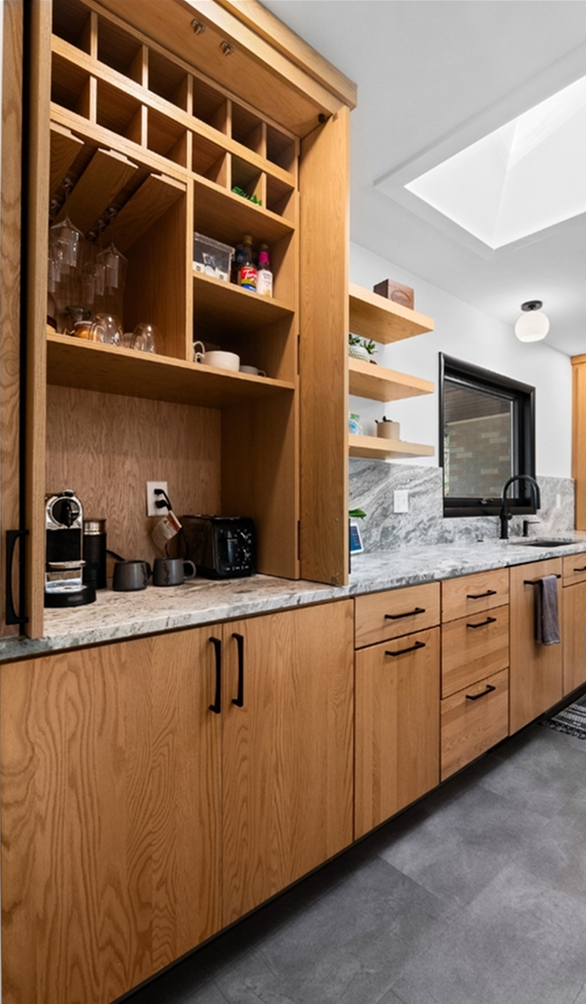
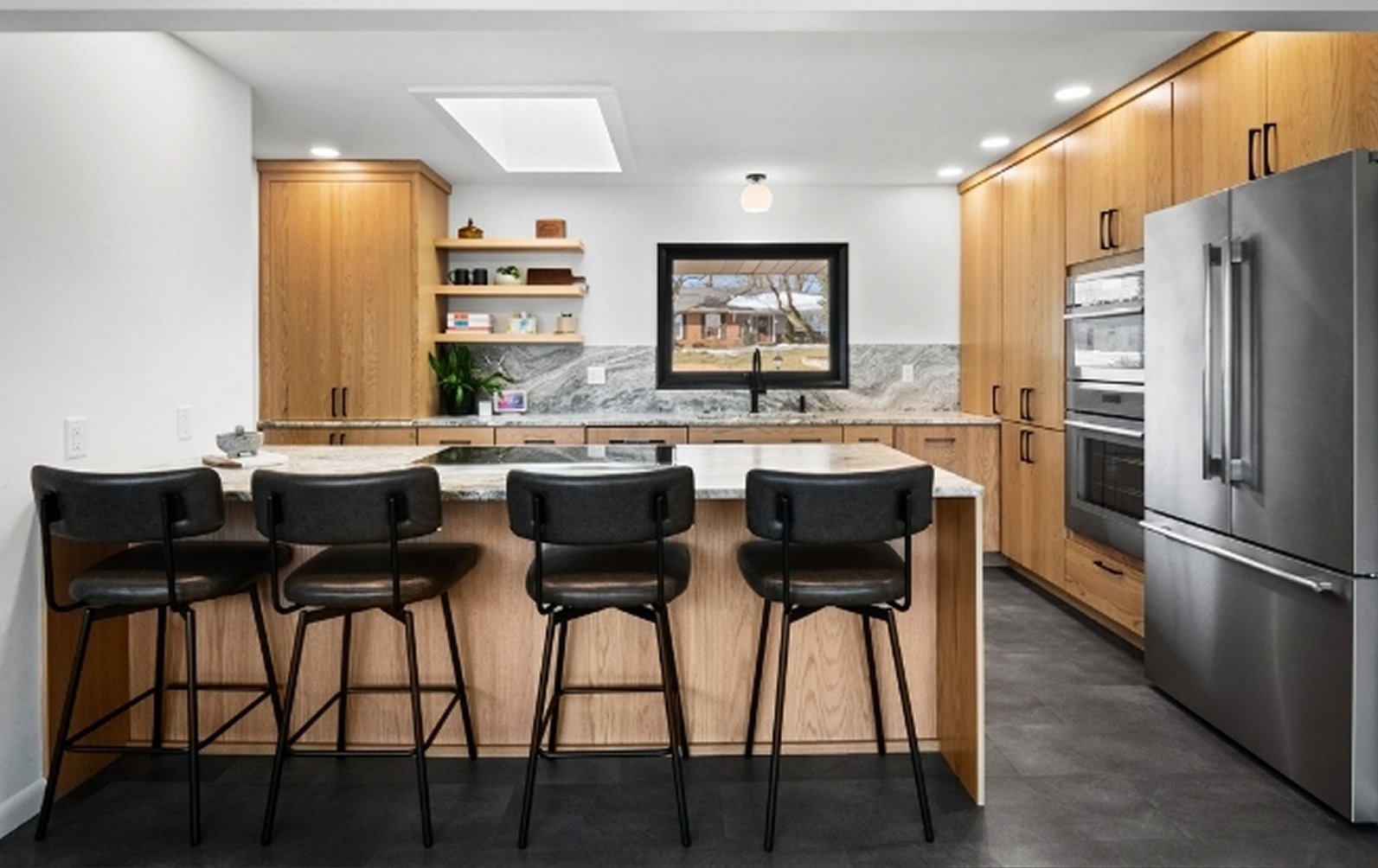
Let’s cut straight to the real numbers. Here’s what different levels of kitchen projects actually cost with a professional design-build firm in St. Louis in 2026.
Kitchen Facelift: $17,000 to $80,000
A kitchen facelift gives you a dramatically updated space without the cost and disruption of gutting everything. This approach works beautifully when your existing layout functions well, but the finishes are dated or worn.
At the lower end ($18,000-$35,000) for a smaller kitchen, you’re typically replacing:
Countertops and backsplash
Sink and faucet
Cabinet hardware
Possibly adding under-cabinet lighting
Mid-range facelifts ($35,000-$65,000) might include:
Professional cabinet refinishing (doors removed, booth-sprayed in shop, boxes refinished on-site with HEPA filtration)
New countertops and backsplash
Updated plumbing fixtures
New lighting (recessed cans, under-cabinet LED)
Some new cabinet components (replacing a desk area, adding pantry pullouts)
Cabinet hardware throughout
Higher-end facelifts ($65,000-$80,000+) can add:
Hardwood floor refinishing or new flooring
More extensive new cabinetry additions
Higher-end countertop materials
More complex tile work
A real example: One recent facelift project totaled $59,716 and included professional cabinet refinishing, quartz countertops, tile backsplash, updated plumbing and electrical, some new cabinet components, and lighting upgrades. The kitchen was transformed without the cost or timeline of full replacement.
Full Kitchen Remodel (Small to Medium Kitchen): $100,000 to $140,000
A complete kitchen remodel means everything comes out and everything goes back in new. New cabinets, countertops, flooring, updated plumbing and electrical, new lighting—the works.
For a smaller kitchen ($100,000-$125,000), you’re getting:
Complete new cabinetry system
Quality countertops (quartz, granite, or similar)
New tile backsplash
Updated plumbing (new rough-in if needed, all new fixtures)
Updated electrical (new circuits, outlets, lighting)
Kitchen flooring (refinished hardwood or new tile/LVP)
Professional project management and master carpenter installation
For a larger kitchen ($115,000-$145,000), the scope is similar but scaled to the square footage, with more linear feet of cabinetry, larger countertop area, and more extensive flooring.
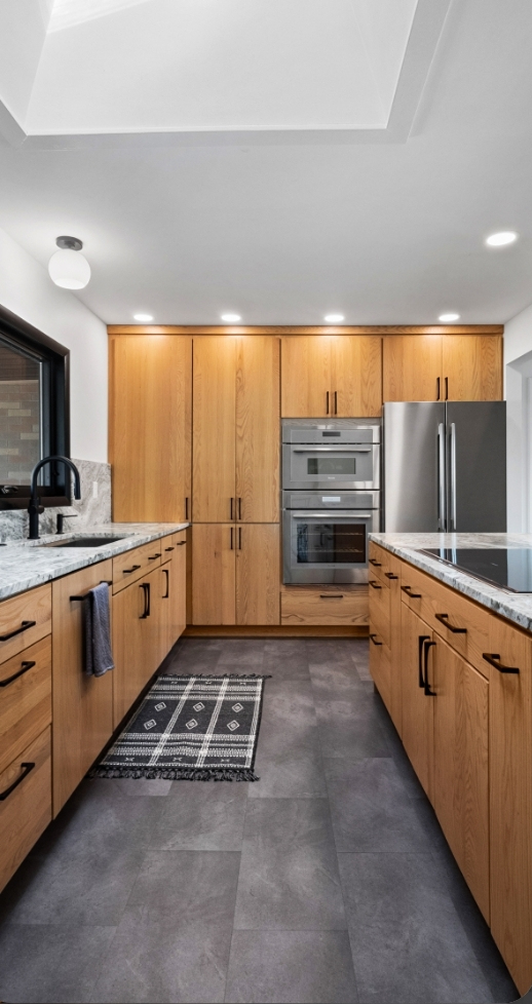
A real example: A current full kitchen remodel in design (no structural work, soffit removal, standard layout) is estimated at approximately $122,000-$140,000 depending on final finish selections. A range such as this could and often does include some work such as flooring in a laundry or adjacent powder room.
Large Kitchen or Whole First Floor: $165,000 to $215,000+
When you’re remodeling a large kitchen or extending the project to include flooring throughout the first floor, costs naturally increase with square footage. Projects can always exceed this top range based on size, scope of work, and selections.
A real example: A recent first-floor remodel including a large kitchen with new cabinetry, countertops, backsplash, all new first-floor hard surface flooring, fireplace surround, new balusters, and the removal and replacement of a structural column totaled $206,016.20.

Structural Modifications: Add $10,000 to $40,000+
Opening walls, removing load-bearing structures, or relocating major systems adds significant cost:
Simple wall removal with beam installation: $10,000-$15,000
Complex structural work (columns, multiple beams): $15,000-$25,000
Structural work plus system relocation (moving plumbing mains, HVAC, electrical panels): $25,000-$40,000+
Historic homes often present additional challenges. That beautiful 1920s home might have knob-and-tube wiring that needs updating, plumbing that’s undersized by modern standards, or structural elements that aren’t where modern framing would place them.
What Drives Your Specific Kitchen Cost?
Every kitchen is different, but certain factors consistently drive costs up or down. Understanding these helps you make informed decisions about where to invest and where to save.
Square Footage and Layout
This one’s obvious but worth stating: bigger kitchens cost more. More cabinetry, more countertop square footage, more flooring, more tile, more lighting. A 10×12 kitchen will cost substantially less than a 15×20 kitchen, even with identical material selections.
Layout changes—even without structural work—can add costs. Moving plumbing locations, relocating electrical panels, or reconfiguring the work triangle requires additional rough-in work that shows up in your plumbing and electrical line items.
Cabinet Selection and Customization
Cabinetry typically represents 22-24% of your total kitchen investment. The choices you make here significantly impact your budget.
Stock cabinets are pre-manufactured in standard sizes. They’re the most affordable option but limit your design flexibility. You work within their standard widths and heights.
Semi-custom cabinets offer more size options, finish choices, and organizational features. This is where most quality kitchen remodels land—enough customization to fit your space well without full custom pricing.
Custom cabinets are built specifically for your kitchen. Every dimension, every detail, every organizational element is designed for your exact needs. Custom cabinets are beautiful but can cost significantly more in both money, as well as time as they are often finished on site.
The difference in cost between these tiers can be $10,000-$20,000 or more on a typical kitchen, but the functionality and fit improve substantially as you move up.
Countertop Materials
Countertops typically run 5-6% of your total project cost, but that percentage can vary significantly based on material choice and square footage.
Common material options in St. Louis:
Laminate: Most affordable, improved aesthetics from years past, but still the budget option
Quartz: Engineered stone, extremely durable, consistent appearance, no sealing required
Granite: Natural stone, unique patterns, requires periodic sealing
Quartzite: Natural stone, harder than granite, stunning appearance, higher cost
Marble: Luxury option, beautiful but requires maintenance and care
For a typical kitchen (35-50 square feet of countertop), you might see costs ranging from $4,000 for basic materials to $12,000+ for premium stone with complex edge details and fabrication.
Flooring Decisions
Kitchen flooring costs vary dramatically based on whether you’re refinishing existing hardwood, installing new hardwood, or using tile or luxury vinyl plank (LVP).
Refinishing existing hardwood is the most cost-effective option if your floors are in good condition. Sanding and refinishing can give you a like-new floor for a fraction of replacement cost.
New hardwood flooring offers a fresh start and the opportunity to change wood species or plank width. Installation requires proper subfloor preparation and skilled installation.
Tile or LVP can be excellent choices for kitchens, especially in historic homes where subfloor issues might make hardwood challenging. Modern LVP has come a long way in appearance and durability.
If you’re extending flooring to the entire first floor (common in open floor plans), this can add $15,000-$25,000 to your project depending on square footage and material selection.
Plumbing and Electrical Updates
Modern kitchens demand more from plumbing and electrical systems than older homes were designed to provide. Combined, these systems typically represent 15-18% of your kitchen remodeling budget.
Plumbing considerations:
Moving sink location requires new drain and supply lines
Adding a pot filler or second sink increases complexity
Historic homes often need updated supply lines (goodbye, galvanized pipe)
Modern fixtures require proper shut-off valves and supply lines
Garbage disposal and dishwasher connections
Electrical requirements:
Modern code requires multiple dedicated circuits for kitchen
Under-cabinet lighting circuits
Pendant and recessed lighting
GFCI outlets near water sources
Proper amperage for modern appliances
Historic homes may need panel upgrades or knob-and-tube removal
The Age Factor: Historic Home Considerations
St. Louis is blessed with beautiful historic homes, but age brings complications that affect budgets. When we open walls in homes built before 1950, we commonly encounter:
Knob-and-tube wiring requiring replacement
Galvanized plumbing needing updates
Structural framing that doesn’t match modern standards
Plaster walls requiring special handling
Unexpected conditions that weren’t visible during planning
We recommend a 3-5% contingency for historic homes. This isn’t padding—it’s reality-based planning for the unknowns that older homes present. You will often see numbers and percentages much higher – that is because not all companies go to the trouble to expose potential surprises in the design and planning phase like a professional design-build firm will. Holes should get cut, sometimes a scope camera is used, etc.
A $120,000 kitchen project should budget $3,600-$6,000 for contingency if using a professional company.
Newer homes (post-1980) might only need 1-2% contingency since construction methods and systems are more predictable.
If you are doing the project with a small company with few professional staff, you should probably budget closer to 10-15%.
Breaking Down the Budget: Where Does Your Money Go?
Let’s look at how costs actually distribute across a typical full kitchen remodel. These percentages are based on real McDermott projects completed in 2025-2026.
For a standard full kitchen remodel (approximately $120,000-$140,000):
Cabinetry: 22-24% ($26,500-$33,600) This is your biggest single line item. It includes all cabinet boxes, doors, drawers, hardware, organizational inserts, and installation. Semi-custom cabinetry in quality finishes with soft-close hardware and organizational features.
Labor and Project Management: 20-22% ($24,000-$30,800) This covers master carpenter installation, project management, coordination of all trades, daily supervision, quality control, and problem-solving. This is where decades of experience show up—in how the project runs, how problems are solved, and how details come together.
Plumbing: 6-8% ($7,200-$11,200) New sink and faucet installation, garbage disposal, dishwasher connection, supply line updates, drain modifications, and any rough-in work for layout changes.
Electrical: 7-9% ($8,400-$12,600) New circuits, outlets, switches, recessed lighting, under-cabinet lighting, pendant fixtures, and any panel work required to support the new kitchen’s electrical demands.
Countertops: 5-7% ($6,000-$9,800) Fabrication and installation of countertops, including edge details, sink cutouts, and backsplash. Material choice significantly impacts where you fall in this range.
Flooring: 6-8% ($7,200-$11,200) Hardwood refinishing, new hardwood installation, or tile/LVP installation including subfloor preparation.
Tile Backsplash: 3-5% ($3,600-$7,000) Material and installation for tile backsplash. Simple subway tile falls at the lower end; complex patterns or premium materials push higher.
Demolition and Disposal: 3-4% ($3,600-$5,600) Careful removal of existing kitchen, protection of surrounding areas, and proper disposal of materials.
Miscellaneous: 5-8% ($6,000-$11,200) Permits, inspections, trim work, touch-up painting, unforeseen conditions, and project closeout.

What About Appliances?
You’ll notice appliances aren’t in the budget breakdowns above. Here’s why: McDermott doesn’t mark up or resell appliances. You work directly with an appliance specialist to select and purchase your appliances at the best possible price.
Why do we do it this way? Three reasons:
You save money. No contractor markup on appliances.
You get better selection. Appliance specialists have broader inventory and deeper product knowledge.
We ensure it all works together. We coordinate installation timing and require appliance specifications before ordering cabinetry—ensuring everything fits perfectly and all doors (both cabinet and appliance) open without conflict.
Budget separately for appliances (2026 St. Louis market):
Entry-level package (range, refrigerator, dishwasher, microwave): $4,000-$8,000
Mid-range package: $8,000-$15,000
Professional/luxury package: $15,000-$35,000+
Note: McDermott does provide custom range hoods that integrate with cabinetry design, as this requires coordination between the hood manufacturer and cabinet maker. This cost is included in your project budget.
What You’re Really Paying For: The Design-Build Infrastructure
At this point, you might be thinking, “These numbers are higher than I expected.” You’re right—they probably are higher than the lowest bid you’ll receive. Here’s what you need to understand about what you’re actually buying.
When you hire a professional design-build company like McDermott, you’re not just paying for materials and labor hours. You’re investing in a complete infrastructure built over 30+ years to protect your family, your house, and the enjoyment of your home.
The People Behind Your Project
Background-checked master carpenters and helpers. Every person on our payroll who enters your home has been vetted. Our carpenters are among the top-paid in the region because they’re among the best. In a labor market where too many people went to college and skilled trades are in short supply, we compete for the finest craftspeople.
Full employee benefits. Our team has health insurance, paid vacation, and professional development. This matters because it means we retain experienced professionals who know what they’re doing. Low-bid contractors using 1099 workers with no benefits have massive turnover—you never know who’s showing up to your house.
Professional design staff. In-house designers who understand both aesthetics and the technical realities of historic home remodeling. They know what works, what doesn’t, and how to design for the way you actually live. They also support your project manager, quickly helping solve a situation that could arise with a cabinet or finish material without waiting for a 3rd party.
Professional estimating staff. Accurate budgets don’t happen by accident. Our estimators have years of experience pricing complex projects and accounting for the realities of historic homes.
Professional office staff. Dedicated people handling billing, warranty concerns, client communication, and money management. When you call with a question, someone answers.
The Infrastructure That Protects You
Proper insurance coverage. $2 million general liability, umbrella coverage, workers compensation, vehicle insurance. If something goes wrong, you’re protected. The guy working out of his truck? He might have basic coverage, or he might have nothing.
Vetted trade partners. Our plumbers, electricians, and other specialists all carry proper insurance and are part of formal trade partner agreements. Our insurance company audits this annually. When a trade partner works in your home, they’re properly insured and accountable.
Professional equipment and vehicles. Clean, well-maintained company vans that won’t leak oil on your driveway. Professional-grade tools and equipment. Job site cleanliness and organization.
Proper accounting procedures. We know at all times how much money in our accounts is ours versus how much belongs to clients in terms of deposits and progress payments. This is where many contractors get into trouble—they use one client’s deposit to finish another client’s project, and the house of cards eventually collapses.
The Systems That Ensure Quality
30+ years of refined processes. We’ve made mistakes over the decades—every company has. The difference is we’ve learned from them and built systems to prevent them from happening again. Written procedures for everything from initial consultation to final walkthrough.
Project management with BuilderTrend. You have real-time visibility into your project schedule, budget, selections, and communication. No wondering what’s happening or when things will occur.
Risk assumption and accountability. When something goes wrong—and on complex projects, something always does—we handle it. If a trade partner fails (rare, but it happens), we’re liable and we bring in someone to fix it. You’re not left managing problems.
This infrastructure isn’t free. It’s built into the cost of your project. But this infrastructure is also why your project finishes on time, on budget, with quality you’ll appreciate for decades.
You want your design-build company to be profitable, to be able to pay all their bills, their taxes, and to reinvest in the business so that they can fix any warranty items and be there to help you service the project years after completion.
The Alternatives
You can hire the guy with the lowest bid. He works alone or with a helper, coordinates his own trades (who may or may not be properly licensed and insured), has minimal overhead, and charges accordingly.
Sometimes this works out fine. Often it doesn’t. And when it doesn’t, you have no recourse. No insurance to cover problems. No company infrastructure to step in and fix things. No processes to prevent issues from happening in the first place.
Hire a small, professional GC company. A small GC (General Contractor) can have a professional process, but typically will not offer any design or planning services. These are great for people who already have a design completed and know what they want, or who don’t mind handling the design and materials selections themselves. They will bid on an architect or designers’ plans and then build it from there. Typically a professional GC will cost approximately 15-25% more than a small operator by themselves.
A professional design-build company typically costs 10-20% more than a traditional general contractor who doesn’t offer design services. The infrastructure, the expertise, the accountability—it all costs money. But it also means your project goes smoothly, your house doesn’t become a war zone, and the result exceeds your expectations.
Smart Investment Strategies: Where to Spend and Where to Save
Not every dollar in a kitchen remodel returns equal value. Here’s how to think strategically about your investment.
Where to Invest for Maximum Impact
Cabinetry quality and function. You’ll interact with your cabinets multiple times every single day. Soft-close hardware, quality construction, and thoughtful organization pay dividends for years. This isn’t where to cheap out.
Professional installation. The difference between competent installation and master craftsman installation shows in every detail. Doors that align perfectly, consistent reveals, trim that fits precisely—these things matter. Poor installation ruins even expensive materials.
Kitchen layout and workflow. If your current layout doesn’t function well, no amount of new finishes will fix it. Invest in getting the layout right, even if it costs more. A well-designed work triangle and proper storage outperform beautiful but dysfunctional spaces.
Adequate lighting. Nothing transforms a kitchen like proper lighting. Under-cabinet lighting for work surfaces, recessed cans for general illumination, pendants over the island for ambiance. This is high-impact for relatively modest cost.
A kitchen remodel often pairs well with other projects. Many of our clients also invest in a bathroom remodel or a basement renovation at the same time to maximize value and minimize disruption. If your kitchen needs more space entirely, a home addition may be worth considering.
Where You Can Save Without Sacrificing Quality
Appliances. Buy current-season floor models or last year’s models from appliance specialists. The technology doesn’t change significantly year to year, but discounts can be substantial.
Backsplash extent. Full-height backsplash from counter to cabinet looks dramatic but costs significantly more than standard 4-inch or partial-height backsplash. Save here if budget is tight.
Cabinet finish complexity. Simple finishes (painted or stained) cost less than distressed, glazed, or multi-step finishes. Similarly, less moldings, scribes, or details on the doors are less expensive. The function is identical; you’re paying for aesthetic complexity.
Countertop edge details. Simple squared or slightly eased edges cost less than complex ogee or beveled edges. The countertop functions the same either way.
Flooring in low-visibility areas. If your kitchen flows into a less-formal space, you might use premium hardwood in the kitchen and transition to quality LVP in adjacent areas. Same visual effect, lower total cost.
The Phasing Option
If your budget doesn’t support everything you want right now, consider phasing:
Phase 1: Facelift – Paint, get new countertops, faucet, maybe a backsplash. This is good if you plan to remodel in 5 years but really want an upgraded look. Be conscious though that you will be spending some money twice if you choose to remodel in the next few years.
Phase 2: Future full remodel – In 5-10 years, do the complete gut and rebuild with new layout, new everything. The facelift buys you time while building equity and planning for the dream kitchen.
This approach works particularly well if you’re uncertain about long-term plans or if you’re new to the house and want to live with the space before committing to major layout changes.
The McDermott Design-Build Advantage
We’ve talked about costs, infrastructure, and smart investing. Here’s how the McDermott approach specifically benefits your kitchen project:
Transparent Pricing
Unlike many contractors who lump everything into vague line items or hide markup in materials, McDermott shows you exactly where every dollar goes. Complete transparency, no games.
When you receive a McDermott proposal, you are welcome to see:
Cabinetry costs
Countertop costs
Labor and project management
Plumbing line items
Electrical line items
Flooring
Tile work
Demolition
Every component broken out clearly
You know what you’re paying for and why.
In-House Design Services
Our designers are employees, not contractors. They work for you, not for cabinet showrooms or product manufacturers. They design for how you live, how you cook, how your family uses the space.
This eliminates the coordination nightmare of traditional remodeling where you work with a designer at one company, buy cabinets from another, and hire a contractor to install everything. When design and building live under one roof, communication is seamless and accountability is clear.
BuilderTrend Project Management
From day one, you have visibility into your project through BuilderTrend software:
Schedule showing what happens when
Selection documentation for all your finish choices
Communication hub for all project questions
Photo documentation of progress
Change order tracking if scope evolves
No wondering what’s happening. No calling to ask for updates. You see it all in real time.
Master Carpenter Project Managers
Every McDermott project is led by a master carpenter who serves as project manager. This isn’t a project manager who used to work in an office and took a construction course. This is a career craftsman with decades of experience who knows how things actually go together.
When problems arise (and they do on every project), your project manager solves them correctly the first time. When details need attention, they see what’s required and ensure it happens. This expertise is built into your labor and project management line item—and it’s worth every penny.
Historic Home Expertise
St. Louis is full of beautiful older homes built when craftsmanship mattered. These homes require contractors who understand how they were built, how they’ve aged, and how to work with them respectfully.
We’ve remodeled hundreds of historic homes over 30+ years. We know what we’ll find when walls open. We know how to preserve original details while modernizing function. We know which surprises are truly surprising and which are just normal for houses of certain eras.
This expertise saves you money by building appropriate contingencies and preventing mistakes that less experienced contractors make when they encounter unexpected conditions.
Timeline Expectations
Understanding costs is one thing. Understanding timelines is another. Here’s what to expect for kitchen projects in St. Louis in 2026.
Design and Planning Phase: 4-8+ Weeks
From initial consultation through design development, selections, and final pricing, plan on 2-4 weeks. This includes:
Initial consultation and needs assessment
Space measurement and documentation
Design concepts and revisions
Material selections and pricing
Final proposal development
Historic homes or complex projects may take longer as we work through design challenges and structural considerations.
Permitting & Material Procurement: 6-12 Weeks
Once design is finalized and a construction agreement is signed, we submit for permits. St. Louis County and most municipalities turn around permits in 1-2 weeks for straightforward projects. More complex projects involving structural changes may take 2-3 weeks.
Materials are ordered after selection sign off at your pre-construction meeting. We do not tear apart your kitchen until all the materials are in and the necessary trades are available to complete the work. That means the actual run time of the project is shorter which equals less time living without a kitchen. Cabinetry and tile can take 6-12 weeks to procure from the date ordered depending on the product and time of year.
Construction: 6-10 Weeks
Kitchen facelifts: 2-4 weeks typically Full kitchen remodels: 6-8 weeks for standard projects Complex kitchen remodels with structural work: 8-12 weeks
These timelines assume:
Normal material lead times (some custom cabinetry can take 6-8 weeks to manufacture)
No significant unforeseen conditions requiring redesign
Normal trade partner availability
Weather cooperation (for any exterior work)
Historic homes tend toward the longer end of these ranges as we work through conditions discovered during demolition.
How to Live During Construction
Your kitchen will be non-functional during construction. Plan for:
Microwave and refrigerator in another room
Paper plates and takeout
Using bathroom or basement sink for dishwashing
Dust and noise during demolition and installation
We work to minimize disruption, but kitchen remodeling is inherently disruptive. Set realistic expectations and plan accordingly.
Financing Your Kitchen Remodel
Many clients choose to pay all cash, or use a blend of cash and financing to pay for their new kitchen. Here are common approaches in 2026.
Home Equity Line of Credit (HELOC)
HELOCs offer flexibility—you draw what you need when you need it and pay interest only on the drawn amount. With rates having declined from recent peaks, HELOCs are again attractive for remodeling projects.
Advantages:
-
Flexibility in draw timing
-
Interest-only payment options during draw period
-
Only pay interest on amount used
-
Preserves a low interest primary note
Considerations:
-
Variable interest rates (though some offer fixed-rate options)
-
Draw period eventually ends and payments increase
-
Requires sufficient home equity and income qualification
Home Equity Loan
Fixed-rate home equity loans provide a lump sum upfront with predictable monthly payments over the loan term.
Advantages:
-
Fixed interest rate and payment
-
Predictable budgeting
-
Potentially lower rates than HELOCs depending on market
Considerations:
-
Receive entire amount upfront (whether you need it yet or not)
-
Less flexible than HELOC
-
Requires sufficient equity and income qualification
Cash-Out Refinance
If you can refinance your primary mortgage at a favorable rate while pulling out cash for remodeling, this can be attractive.
Advantages:
-
Single mortgage payment
-
Potentially lower rate than equity products
-
Can consolidate other debt
Considerations:
-
Closing costs similar to original mortgage
-
Extends your mortgage term if you’re years into current mortgage
-
Only makes sense if refinance rate is competitive with current mortgage
Payment Timing for Contractors
Most remodeling contracts require:
-
Deposit at contract signing (typically 10-30%)
-
Progress payments at project milestones
-
Final payment at project completion
Plan for this payment structure when considering financing options. You’ll need access to funds throughout the project, not just at the end.
Getting Your Accurate Estimate
Generic cost guides are helpful for understanding ranges, but your specific kitchen remodel requires an accurate estimate based on your space, your goals, and your home’s specific conditions.
What to Prepare for Initial Consultation
Think about how you use your kitchen:
-
What frustrates you about the current layout?
-
What do you love that must be preserved?
-
How many cooks typically work simultaneously?
-
Do you entertain? How many people?
-
What’s your cooking style? (If you rarely cook, a six-burner professional range makes no sense)
Collect inspiration images:
-
Not to copy exactly, but to show aesthetic preferences
-
Style, color palette, material preferences
-
Elements you absolutely love and absolutely hate
Understand your home:
-
Approximate age of home
-
Any known issues with plumbing, electrical, or structure
-
Previous remodeling work in the kitchen
-
How long you plan to stay in the home
Consider your budget reality:
-
What can you actually afford to invest?
-
Are you financing or paying cash?
-
Is this your forever kitchen or a 10-year solution?
Ready to take the next step? Browse our featured kitchen projects for inspiration, or learn how to choose the right kitchen remodeling contractor in St. Louis.
Why Kitchen Remodeling Costs What It Does
If you’ve read this far, you understand that quality kitchen remodeling is a significant investment. Here’s the fundamental reality: you’re not just buying materials and labor hours. You’re buying:
Expertise developed over decades. The knowledge to design functional, beautiful spaces that work with your historic home’s unique characteristics.
Systems and processes that ensure your project runs smoothly from consultation through final walkthrough.
Professional infrastructure that protects you, your home, and your investment throughout the project.
Accountability and warranty support that extends years beyond project completion.
Peace of mind that comes from working with a company that’s been serving St. Louis for over 30 years and will be here for the next 30.
Yes, you can hire cheaper. You can always hire cheaper. But cheaper comes with risks: poor quality, project abandonment, lack of accountability, hidden costs that emerge mid-project, and results that disappoint rather than delight.
The kitchen is the heart of your home. You’ll use this space multiple times every single day for years or decades. The difference between a mediocre kitchen remodel and an excellent one isn’t just aesthetic—it’s functional, it’s durability, it’s daily quality of life.
Next Steps: Your Kitchen Remodel Starts Here
If you’re serious about remodeling your kitchen in 2026, the next step is simple: schedule a consultation.
We’ll meet at your home, see your space, understand your vision, discuss your goals and budget, and explain exactly how we work. There’s no cost for this consultation and no obligation to move forward.
By the end of our conversation, you’ll understand:
-
Whether your goals are realistic for your budget
-
What your project timeline might look like
-
How our design-build process works
-
What makes McDermott different from other contractors
-
What your next steps would be if you decide to move forward
Contact JT McDermott Remodeling Contractors to schedule your consultation. We serve Clayton, Central West End, Webster Groves, Ladue, Kirkwood, Richmond Heights, and throughout the St. Louis metro area.
Your dream kitchen is waiting. Let’s make it happen—with complete transparency, professional expertise, and the quality craftsmanship that St. Louis homeowners have trusted for over 30 years.